
In multi-unit buildings, water damage problems can escalate quickly because one leak can affect multiple living spaces. Even a small plumbing issue in an upstairs apartment can lead to moisture intrusion in lower units, requiring immediate professional attention.
This Project Spotlight from Four Peaks Restoration highlights a recent mold and water mitigation job completed at an apartment complex on N. Central Ave in Phoenix, Arizona. The response involved bathroom demolition, moisture control, and structural drying to ensure the property was safely prepared for rebuild.
The Situation: Bathroom Leak Impacting an Apartment Complex
The project began when a contractor contacted Four Peaks Restoration regarding water damage in an apartment unit caused by a leak in an upstairs apartment.
Water had migrated into two bathrooms in the affected unit, leading to concerns about potential mold growth and structural moisture.
Because apartment buildings share plumbing systems and structural pathways, leaks often travel between units or floor levels before being detected. This creates hidden moisture conditions that must be properly addressed before reconstruction begins.
Initial Inspection and Scope of Work
Upon arrival, the Four Peaks Restoration team conducted a full inspection of both affected bathrooms.
The assessment confirmed that moisture had penetrated building materials in both areas, requiring partial demolition to access and dry the structure properly.
To prepare the site for mitigation, the team focused on:
- Identifying moisture-affected materials
- Evaluating mold risk
- Preparing areas for controlled demolition
- Establishing drying strategy
Fortunately, during inspection, only minimal mold growth was identified, which allowed the team to focus primarily on moisture removal and structural drying rather than extensive remediation.
Controlled Demolition for Full Moisture Access
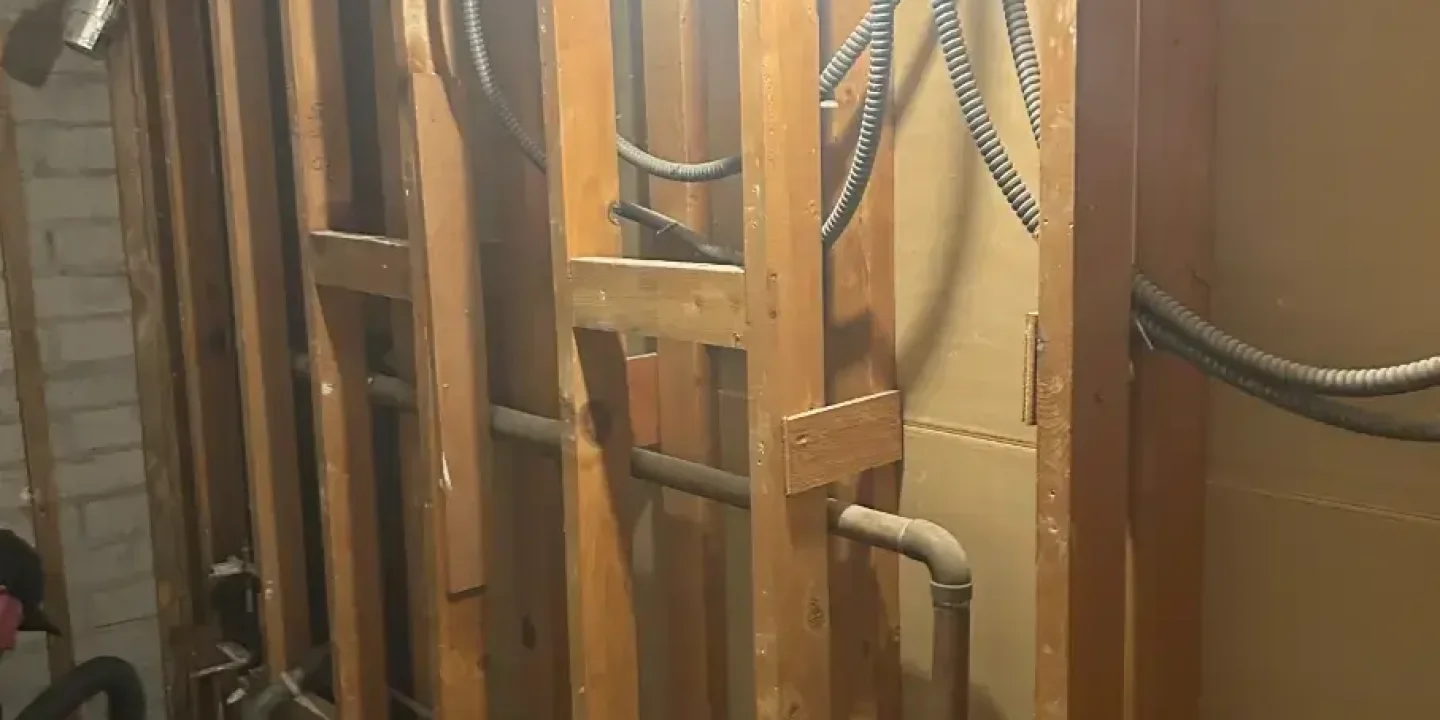
To properly address the water intrusion, both bathrooms required targeted demolition.
The following materials were removed:
- Damaged drywall
- Shower enclosure systems
This step was necessary to expose hidden moisture within wall cavities and structural components.
In water damage restoration, demolition is not just about removing damaged materials—it is a critical step in ensuring that trapped moisture does not remain behind finished surfaces where it could later lead to mold growth.
Once the affected materials were removed, the structure was fully exposed for drying.
Moisture Control and Drying Setup
After demolition, the priority shifted to preventing any further moisture-related issues and ensuring the structure was properly dried.
The Four Peaks Restoration team installed professional drying equipment, including:
Air Movers
High-velocity air movers were placed strategically to increase airflow across exposed surfaces. This helps accelerate evaporation and removes moisture trapped in building materials.
Commercial Dehumidifier
A commercial-grade dehumidifier was used to control humidity levels inside the affected bathrooms and surrounding areas. This ensures that evaporated moisture is efficiently removed from the air rather than being reabsorbed into materials.
This combination of airflow and dehumidification created optimal drying conditions for the structure.
Monitoring the Drying Process
Even in smaller or less severe water damage cases, monitoring is essential to ensure complete drying.
Over the next two days, technicians from Four Peaks Restoration regularly checked moisture levels using specialized meters.
They evaluated:
- Wall framing
- Subfloor areas
- Remaining structural materials
- Ambient humidity levels
This careful monitoring ensured that no hidden moisture remained in the structure before clearance for rebuild was given.
Results: Clean, Dry, and Ready for Reconstruction
After two days of controlled drying, all areas were tested and confirmed dry.
The results showed:
- No remaining moisture in structural materials
- No active mold growth detected
- Safe conditions for reconstruction
- Bathrooms ready for remodel work
Because the issue was addressed quickly, the project avoided escalation into a more serious mold remediation case.
Why Quick Response Matters in Apartment Water Damage
Apartment complexes present unique challenges when it comes to water damage and mold prevention.
Delays in response can lead to:
- Moisture spreading between units
- Increased repair costs for property managers
- Tenant disruption and complaints
- Higher risk of mold development
- Structural deterioration over time
Fast mitigation ensures that damage remains localized and easier to manage.
Key Takeaways from This Project
This Phoenix apartment restoration highlights several important lessons:
1. Even Small Leaks Require Immediate Attention
Even though minimal mold was found, moisture was still present and required professional drying.
2. Demolition Is Sometimes Necessary
Removing damaged materials is essential for reaching hidden moisture inside walls and shower enclosures.
3. Drying Is a Critical Step
Proper air movement and dehumidification prevent future mold growth and structural issues.
4. Monitoring Ensures Safety
Moisture testing confirms when an area is truly ready for rebuild.
Why Property Managers Trust Four Peaks Restoration
For apartment complexes and multi-unit properties across Phoenix and surrounding Arizona communities, Four Peaks Restoration provides reliable and fast-response restoration services.
Clients choose Four Peaks Restoration because of:
- Firefighter-owned leadership and discipline
- Rapid emergency response capabilities
- Experience with multi-unit property restoration
- Advanced drying and moisture detection technology
- Clear communication with contractors and property managers
- Commitment to restoring safe living environments
Every project is handled with precision, urgency, and professionalism to minimize downtime and disruption.
Frequently Asked Questions
How fast can mold start after a water leak in an apartment?
Mold can begin developing within 24 to 48 hours if moisture is not properly addressed.
Why is demolition needed during water damage restoration?
Demolition exposes hidden moisture behind walls and fixtures, allowing proper drying and preventing future mold growth.
Can small amounts of mold be ignored?
No. Even small mold growth can spread if moisture conditions remain unresolved.
How long does structural drying take?
Drying time varies, but small bathroom projects typically take 1 to 3 days depending on moisture levels.
Do apartment buildings require special water damage procedures?
Yes. Multi-unit structures require careful containment and coordination to prevent cross-unit damage.
Need Apartment Mold or Water Damage Restoration in Phoenix?
If you manage an apartment complex or have experienced water intrusion in a residential unit, fast action is critical.
Four Peaks Restoration provides professional water damage restoration, mold remediation, and structural drying services throughout Phoenix and surrounding areas.
Four Peaks Restoration
4135 E Comstock Dr.
Gilbert, AZ 85296
(480) 269-2232
info@4peaksrestoration.com
Our firefighter-owned team is ready to respond quickly and restore safety, structure, and peace of mind.
